
Access Control for Today’s Businesses

Modern Access Control Systems: From Security Tool to Strategic Advantage
For years, access control systems were viewed as a necessary layer of protection — a way to lock doors, manage credentials, and keep unauthorized people out. Today, that mindset is changing. Modern organizations are discovering that access control systems do far more than secure facilities. They generate a constant stream of operational intelligence that can improve efficiency, reduce costs, automate workflows, and support smarter business decisions.
From healthcare campuses and schools to corporate offices, retail chains, and multi-site enterprises, security leaders are transforming access control into a business asset.
Turning Access Data into Actionable Intelligence
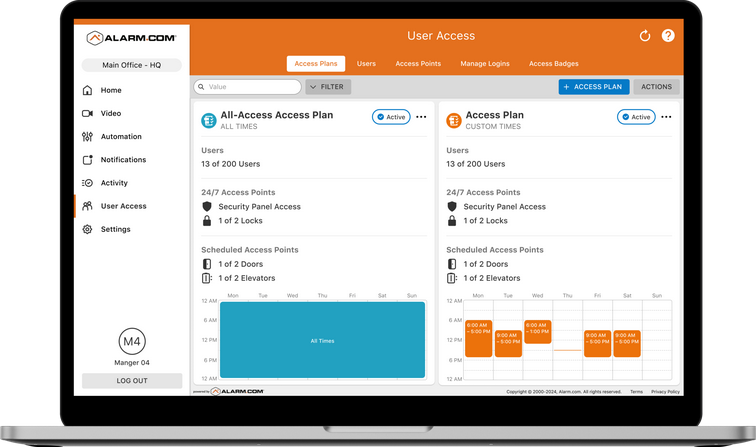
Every badge swipe, door unlock, and occupancy event tells a story. Modern reporting dashboards turn that raw activity into insights organizations can actually use.
Instead of digging through spreadsheets or manually compiling reports, teams can instantly visualize patterns in space utilization, employee movement, and facility usage. Those insights can influence everything from workplace design to staffing decisions.
For Example:
- If smaller conference rooms are consistently booked while large meeting spaces sit empty, leadership can rethink future office layouts.
- If certain entrances or shared spaces experience heavy traffic, facilities teams can optimize cleaning schedules and maintenance routines.
- If buildings remain largely unused after certain hours, organizations can reduce HVAC and lighting usage to cut energy costs.
- Front desk staffing and security schedules can be adjusted based on actual occupancy trends rather than assumptions.
The real power emerges when access control data is connected with other business systems across the enterprise. Contractor access logs can be compared against billed hours for verification. Cafeteria managers can identify purchasing trends to better predict inventory needs. Operations teams gain a clearer picture of how people interact with the workplace every day.
What once served purely as a security record becomes a valuable operational dataset.

Creating a Frictionless Experience for Employees and Visitors
Modern access control systems are also reshaping how people move through organizations.
By integrating access control with HR systems, identity management platforms, and facility databases, organizations can automate many of the processes that once required manual oversight.
A contractor can receive temporary credentials tied to a project timeline and access level. When an employee leaves the company, their credentials can automatically deactivate the moment HR finalizes the offboarding process. Employees visiting another company location can gain temporary access using the same credential they already carry.
This level of integration improves both convenience and security while reducing the risk of human error.
Organizations can also automate role-based permissions. As employees change departments, receive promotions, or take on new responsibilities, their access privileges can update automatically. Instead of relying on manual credential management, the system continuously aligns permissions with business policies.
In many organizations, employee credentials now extend beyond door access. A single badge or mobile credential can support cafeteria purchases, parking access, elevator permissions, and point-of-sale transactions — creating a more seamless enterprise experience.
Automation That Saves Time, Money, and Resources
One of the biggest advantages of modern access control systems is automation.
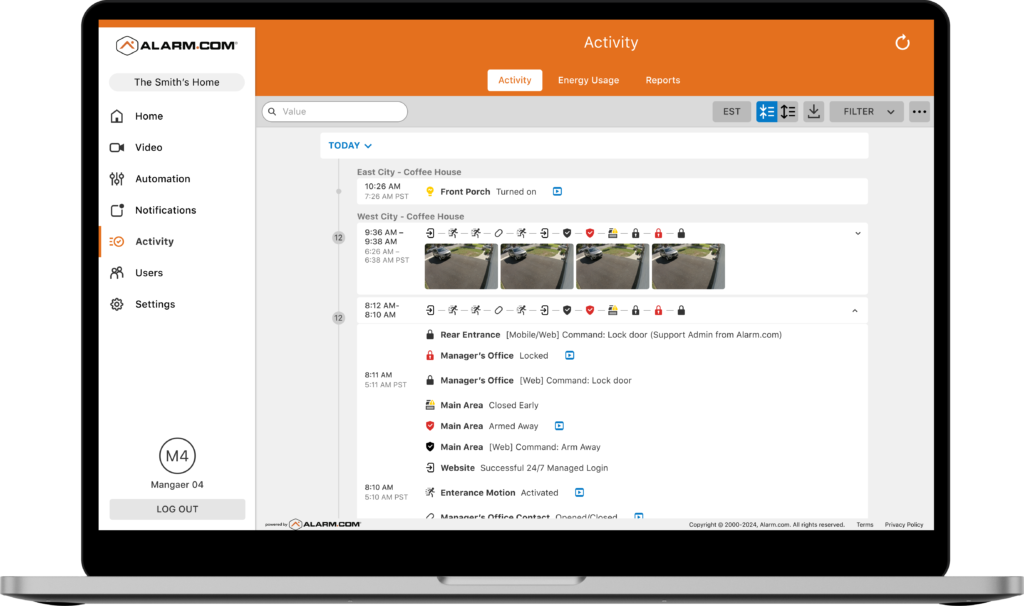
Rather than simply responding to events, today’s systems can trigger intelligent workflows across an organization.
When the last employee badges out for the night, HVAC systems can automatically shift into energy-saving mode. When the first employee arrives in the morning, intrusion alarms can disarm automatically.
Event-based automation allows organizations to adapt facilities in real time. During a school sporting event, for example, operators can automatically unlock public-facing areas while restricting access to administrative offices. In a multi-tenant office building, elevator access can require credentials after hours. Stadiums and hospitality venues can even create personalized experiences for VIP guests by triggering lighting, temperature, or alert workflows upon arrival.
Automation also simplifies compliance management.
If a required certification expires, a driver’s license becomes invalid, or a mandatory training requirement is overdue, access permissions can automatically suspend until records are updated. Instead of relying on manual audits, organizations can enforce compliance policies continuously and consistently.
Why Organizations Are Moving Toward Open, Unified Platforms
Many organizations are moving away from closed, vendor-locked systems in favor of open architecture platforms.
Open systems provide the flexibility to integrate hardware and software from multiple vendors without sacrificing performance or scalability. More importantly, they allow organizations to adapt over time instead of rebuilding infrastructure every time technology evolves.
Unified platforms create a centralized environment where access control, video surveillance, intrusion detection, visitor management, and analytics systems work together seamlessly.
Instead of jumping between disconnected systems, operators can view access events alongside live video feeds, alarms, and workflow alerts from a single interface. This unified approach improves situational awareness, accelerates decision-making, and reduces training complexity for security teams.
The result is a smarter, more connected security ecosystem that supports both protection and operational efficiency.

Building a Future-Ready Security Foundation
Modernizing access control is no longer just a security upgrade — it’s a business transformation strategy.
Organizations that move beyond outdated systems gain more than stronger protection against evolving threats. They unlock new efficiencies, automate critical processes, improve compliance, and gain operational insights that support smarter decisions across the enterprise.
As workplaces continue to evolve, access control systems will play an increasingly important role in how organizations manage people, spaces, and resources.
The organizations investing in modern, unified platforms today aren’t just securing doors. They’re building intelligent environments designed to adapt, scale, and deliver long-term strategic value.